USER STORY
Memgraph and GraphRAG: Transforming Diabetes Management in Healthcare

Challenge
Precina Health needed to manage and analyze the complex relationships between medical, behavioral, and social data in real time, which their previous systems couldn’t handle.
Solution
By implementing GraphRAG with Memgraph’s real-time graph processing, they efficiently analyzed and connected patient data across multiple dimensions, enabling personalized, holistic care at scale.
Reading time: 6min
About Precina Health
Precina Health is a technology enabled medical practice that is defeating Type 2 Diabetes. In clinic-based pilot study observations, 49 of 50 patients experienced glycemic control in a 12-week period (12x faster and 5-8x more effective) with continued control for years. New clinical protocols and technology solve this problem at scale and they are building a team to help reinvent this corner of the healthcare system creating accessible and affordable care for those with complex medical conditions, especially those in the poorest and most remote areas.
Josiah Bryan, the CTO of Precina Health, leads the technical efforts, ensuring that the company’s healthcare solutions use real-time, data-driven decision-making.
Josiah Bryan, the CTO of Precina Health, leads the technical efforts, ensuring that the company’s healthcare solutions use real-time, data-driven decision-making.
Impact highlights
Using GraphRAG
Precina Health’s use of GraphRAG in managing Type 2 diabetes delivers impressive results, notably a 1% reduction in HbA1C levels per month—far exceeding typical care benchmarks.
Real-time patient data
Their protocols integrates real-time clinical, behavioral, and social data, allowing providers to offer personalized, holistic care. This project goes beyond managing blood sugar levels, addressing factors like transportation or emotional stress that impact patient health.
Scalable solution
Precina’s scalable approach makes high-quality, personalized care accessible to low-income and rural patients. The system empowers providers with real-time insights, enabling them to adjust treatment plans based on each patient’s unique needs.
"We've been able to reduce patients' HbA1C by 1% per month—far faster than the typical annual reductions. It's about integrating all aspects of a patient's life, not just their medical records."
Josiah Bryan, CTO at Precina Health

Key Memgraph Features for Precina Health
- Real-time graph processing
- Memgraph’s ability to process complex patient data in real-time allowed Precina Health to manage dynamic, constantly evolving datasets effectively.
- Multi-hop reasoning
- Memgraph’s graph structure enables “multi-hop” queries, helping Precina trace complex relationships across patient data, such as medical history, social context, and behavioral patterns.
- Flexible deployment
- Memgraph supports multiple deployment environments, including Docker and Kubernetes. This flexibility gave the team the agility to build, iterate, and scale rapidly.
- Data durability
- Memgraph’s ability to store asset information and relationships within a single database eliminated the need for complex lookup tables and, due to its in-memory nature, allowed for quick checks and real-time updates.
Backstory
Before adopting Memgraph and GraphRAG, Precina Health needed a healthcare data system that could handle the complexity of their approach. Managing large, disparate datasets—particularly the relational context between medical, behavioral, and social factors—posed significant challenges. The existing solutions were either too slow, rigid, or incapable of providing the real-time insights necessary for personalized care.
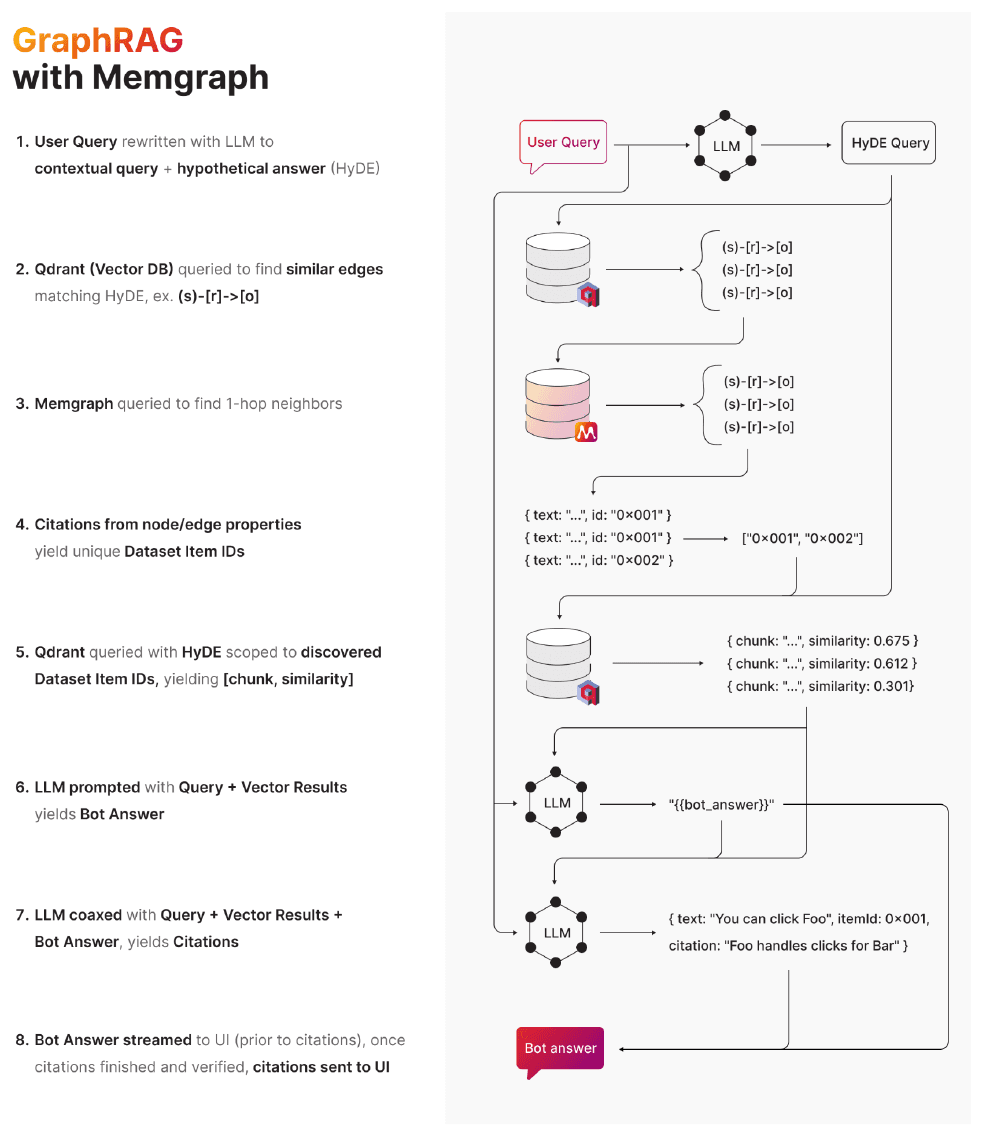
Precina needed a solution that would allow them to build a knowledge graph of patient data capable of handling complex relationships and supporting real-time decision-making. This need led them to GraphRAG, where they could merge the power of large language models (LLMs) with graph databases to retrieve, reason, and act on data quickly.
Precina needed a solution that would allow them to build a knowledge graph of patient data capable of handling complex relationships and supporting real-time decision-making. This need led them to GraphRAG, where they could merge the power of large language models (LLMs) with graph databases to retrieve, reason, and act on data quickly.
Challenge
Managing complex, disparate datasets—particularly integrating medical, behavioral, and social data—in real time to provide personalized care, which traditional healthcare systems couldn’t handle efficiently.
Precina Health tackled the messy world of healthcare data with a smart combo: GraphRAG and Memgraph.
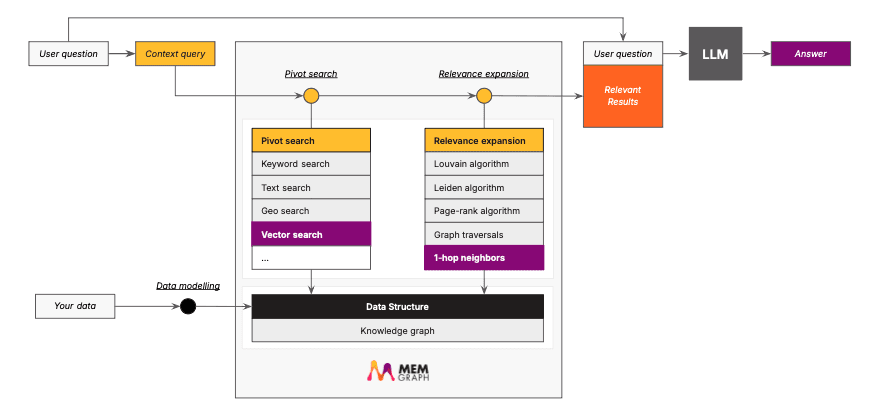
Traditional systems weren’t cutting it—they couldn’t handle the mix of medical records, behavioral insights, and social context that real patient care requires. With Memgraph’s real-time data processing and multi-hop reasoning, they could piece together a complete picture of a patient’s life, updating insights as new data came in.
It’s not just about reading insulin levels; they’re factoring in whether someone’s bus was late or if a stressful life event happened. Using Memgraph’s graph structure and vector search from Qdrant, they quickly pulled up relevant data and kept everything connected, making care genuinely personalized. This setup helped Precina deliver better care, especially for patients who usually fall through the cracks in the system—underserved, low-income, rural populations. It is efficient, scalable, and truly human-centered.
It’s not just about reading insulin levels; they’re factoring in whether someone’s bus was late or if a stressful life event happened. Using Memgraph’s graph structure and vector search from Qdrant, they quickly pulled up relevant data and kept everything connected, making care genuinely personalized. This setup helped Precina deliver better care, especially for patients who usually fall through the cracks in the system—underserved, low-income, rural populations. It is efficient, scalable, and truly human-centered.
Why Memgraph?
When asked why they chose Memgraph, Josiah was clear: developer experience.
Precina Health found that Memgraph’s strong documentation and support helped them get up and running quickly. The flexibility of deployment environments, including local setups, Docker, and Kubernetes, allowed Precina to iterate rapidly and experiment with various configurations. Additionally, Memgraph’s real-time processing capabilities were critical for ensuring providers could act on patient insights in real time.
Another critical factor was Memgraph’s ability to support complex queries and multi-hop reasoning—a feature that allowed Precina to connect the dots across various types of patient data. This relational context was something they couldn’t achieve as effectively with previous solutions.
"Memgraph stood out for its real-time graph processing and the flexibility to deploy quickly. We needed a system that could handle complex data relationships, and Memgraph's developer experience made it easy for us to build and iterate rapidly."
Josiah Bryan, CTO at Precina Health
Results
Precina Health’s blend of GraphRAG and Memgraph is making waves in diabetes care, driving a 1% monthly drop in HbA1C levels beyond the usual yearly improvements. By tapping into real-time insights, they’re giving healthcare providers the tools to make decisions that move the needle on patient outcomes. But it’s not just about the numbers—they tie together social, behavioral, and clinical data to deliver holistic care. That means factoring in everything from missed buses to emotional stress, not just the medical side. The result?
More personalized care that adapts to the patient’s real-world challenges.
Continue reading our customer stories
Let's see how Memgraph fits into your environment